Free Daily Mini Crossword

Play a free 5×5 crossword in your browser. Every clue is about movies, TV, or entertainment. No account or download required, and previous puzzles stay playable.

Past games

Halloween Is Big Business in Hollywood. Nothing Spooky About It

For movie fans, Halloween means a good excuse to revisit their favorite scares. For Hollywood, it means another chance to sell them. Every October brings a ready-made occasion for rereleases, streaming promotions, costumes, and merchandise. Movies like *Halloween*, *Scream*, *Beetlejuice*, and *Hocus Pocus* show how a memorable character or a familiar title can keep attracting audiences long after its first theatrical run. But these seasonal staples took very different routes to becoming valuable Hollywood properties.

**Halloween (1978)** offers the most dramatic example: a reported **$325,000 production budget that generated roughly $70 million in worldwide ticket sales**. Its most recognizable asset emerged from a remarkably inexpensive solution. Production designer Tommy Lee Wallace modified a commercially produced Captain Kirk mask, widening the eyeholes, altering the hair, and repainting it to create Michael Myers’s unsettling face. What began as a practical production decision became the visual signature of an enduring franchise. Hollywood couldn’t have ordered a better outcome from a much more expensive mask.

**Scream (1996)** demonstrated the commercial power of making familiar scares feel fresh. With a reported **$15 million production budget**, it earned approximately **$173 million worldwide**. Its opening weekend in the U.S. and Canada brought in just **$6.4 million**, but sales grew over the following two weekends as audiences found it. Even the title involved a decision about how to sell the experience: Kevin Williamson’s screenplay was originally called *Scary Movie*, but the studio wanted to emphasize the danger alongside the humor. *Scream* delivered a clearer promise—and a name that could anchor a franchise.

**Beetlejuice (1988)** showed that a peculiar identity could be a commercial advantage. Made for a reported **$15 million**, it has collected approximately **$78 million in recorded worldwide box office, including rereleases**. Warner Bros., however, initially wanted the more literal title *House Ghosts*. Tim Burton jokingly suggested *Scared Sheetless*, then discovered the studio might actually use it. Keeping *Beetlejuice* preserved something more distinctive: a title that immediately calls its unruly central character to mind. That kind of recognition is valuable when a movie’s life extends beyond theaters and into costumes, merchandise, and repeat viewing.

**Hocus Pocus (1993)** is the reminder that opening results don’t always reveal a movie’s long-term potential. Its reported **$28 million production budget** yielded **less than $45 million worldwide during its original theatrical run**—a disappointment once marketing expenses and theaters’ share of ticket sales were considered. Released in July, the Halloween comedy found its lasting audience later through home viewing and repeated television broadcasts. Rereleases have helped raise its recorded worldwide theatrical total to approximately **$52 million**. The Sanderson sisters became annual attractions gradually, turning an underwhelming release into a property Disney could bring back to audiences every spooky season.

The business appeal is easy to understand. Most movies have to fight for attention when they arrive. A Halloween favorite gets a fresh invitation every year. The calendar gives studios a reason to promote it again, while familiar characters give audiences a reason to return.

For Hollywood, Halloween is big business: recognizable characters, sequels, merchandise, and another October to sell the scares. Michael Myers sells fear. The Sanderson sisters sell nostalgia. And audiences keep buying both. There’s nothing spooky about it—just a holiday that keeps giving Hollywood reasons to cash in.

*Figures are approximate, in U.S. dollars, and not adjusted for inflation. Box-office grosses are ticket sales, not studio profits; production budgets exclude marketing.*

Read full article
  1. In Halloween (1978) production lore, what early title is often reported for the screenplay—but later disputed by producer Irwin Yablans? Reveal answer Hide answer

    The Babysitter Murders. en.wikipedia.org

  2. What was the original script/production title of Scream (1996) before it was changed late in production? Reveal answer Hide answer

    Scary Movie. en.wikipedia.org

  3. What working title is widely reported for Hocus Pocus (1993)? Reveal answer Hide answer

    Disney’s Halloween House. en.wikipedia.org

  4. According to a PBS interview, what film title did Tim Burton recall a studio wanting to change after research suggested people disliked it? Reveal answer Hide answer

    Beetlejuice. pbs.org

  5. Before becoming a feature, what did Tim Burton first write that launched The Nightmare Before Christmas (1993)? Reveal answer Hide answer

    A three-page poem. en.wikipedia.org

Sources

View full trivia

From Toy Story to AI: What Makes a Story Real?

In 1995, I was ten years out of university and raising a young family, with a three-year-old and a one-year-old. As a technologist, I was already a Steve Jobs fan, although I was more interested in what he was doing at NeXT and Pixar than in Apple itself. Then Toy Story arrived, at just the right moment in my life.

It brought together two parts of my world: my interest in technology and my life as a father. A company I followed for its technical ambition was making something I could share with my children. I still recall getting caught up in the frenzy to find a talking Buzz Lightyear toy during the holidays that followed. That gives Toy Story a personal significance for me that goes beyond its place in movie history.

Looking back, it is easy to forget how uncertain that history once was. Released in November 1995, Toy Story was the first entirely computer-animated feature film. [1] Today, as we debate AI actors and filmmaking, I keep coming back to what made those digital toys matter to us: the recognizable feelings and human imagination behind them.

Steve Jobs was central to that gamble. In 1986, he purchased Lucasfilm’s computer division and established Pixar as an independent company. The team’s animation ambitions developed alongside its technology business, eventually leading to a feature-film agreement with Disney in 1991. Jobs supplied the business leadership behind a creative and technical team attempting something no studio had accomplished. [1][2]

Yet the crisis that nearly derailed Toy Story involved a surprisingly familiar Hollywood problem: an unlikable leading man.

On November 19, 1993, Pixar presented Disney with a disastrous story reel. Efforts to make Woody edgy had turned him abrasive and cynical. Hiring froze, and the filmmakers scrambled to revise the material. In the San Francisco Chronicle’s oral history, crew members recalled restoring their own storytelling instincts and rebuilding key scenes around character. The episode became known as “Black Friday.” The film’s future depended on making audiences care about its cowboy. [3]

To me, that is the heart of authenticity in storytelling. Woody’s jealousy, his fear of being replaced, and his eventual friendship with Buzz feel familiar. We can recognize ourselves in a character who has never physically existed. The filmmakers gave those feelings a convincing expression through an unfamiliar medium.

Computers created Toy Story’s images, but artists built and animated its characters, and Tom Hanks and Tim Allen supplied the central voices. Animators studied footage of their recording sessions to shape the performances. The potential disruption was already apparent: WIRED reported in 1995 that Jobs envisioned computer animation potentially supplanting traditional two-dimensional cel animation. [4] Creative possibility and disruption could arrive together.

That history makes me reluctant to dismiss a film simply because its creators use AI. A filmmaker can bring personal experience, taste, humor, and intention to a project while using software to help realize it. The creative choices still matter: what to show, what to leave out, which performance feels right, and when a scene has earned its emotion. If AI helps someone express a vision that would otherwise remain beyond their reach, I see room for something authentic.

Computer animation and generative AI are different technologies, and an emotionally convincing result does not settle questions about how it was made. In September 2025, SAG-AFTRA objected to the synthetic performer Tilly Norwood, arguing that replacing actors threatened livelihoods and alleging that performers’ work had been used without permission or compensation. [5] Those concerns deserve answers. A film can move an audience while its production practices still warrant scrutiny.

But I believe we should leave room for artists to demonstrate what they can do with these tools. For me, authenticity means being able to feel a human point of view in the work. That can come through a drawing, a digital character, or an image shaped with AI. The method alone cannot tell us whether someone has something meaningful to say.

I think back to the young father searching for a talking Buzz Lightyear. The technological breakthrough had become a character I wanted to bring home to my children. If people can use AI to create that kind of connection, could we be looking at the beginnings of another Toy Story?

Read full article
  1. What internal nickname is commonly given to the day Disney saw an early Toy Story story reel and the film went into major rewrites? Reveal answer Hide answer

    “Black Friday.” en.wikipedia.org

  2. Before the final buddy duo took shape in Toy Story, which character from Pixar’s short Tin Toy was once positioned as a lead? Reveal answer Hide answer

    Tinny. d23.com

  3. According to director Lee Unkrich, where did the Toy Story 3 team go on a story retreat to reset the film’s direction? Reveal answer Hide answer

    Tomales Bay. firstshowing.net

  4. What production issue is cited for why Pixar had to recreate many character models for Toy Story 3 instead of simply reusing and editing the older ones? Reveal answer Hide answer

    The old model files could be opened, but errors prevented them from being edited, forcing rebuilds from scratch. en.wikipedia.org

  5. How did Pixar create Mr. Potato Head’s dialogue for Toy Story 4 after Don Rickles died? Reveal answer Hide answer

    By using archival recordings of Rickles’ previously recorded lines, with his family’s permission. comicbook.com

Sources

View full trivia

The Art of the Shabby Spy: How Slow Horses Makes Grime Look Glamorous

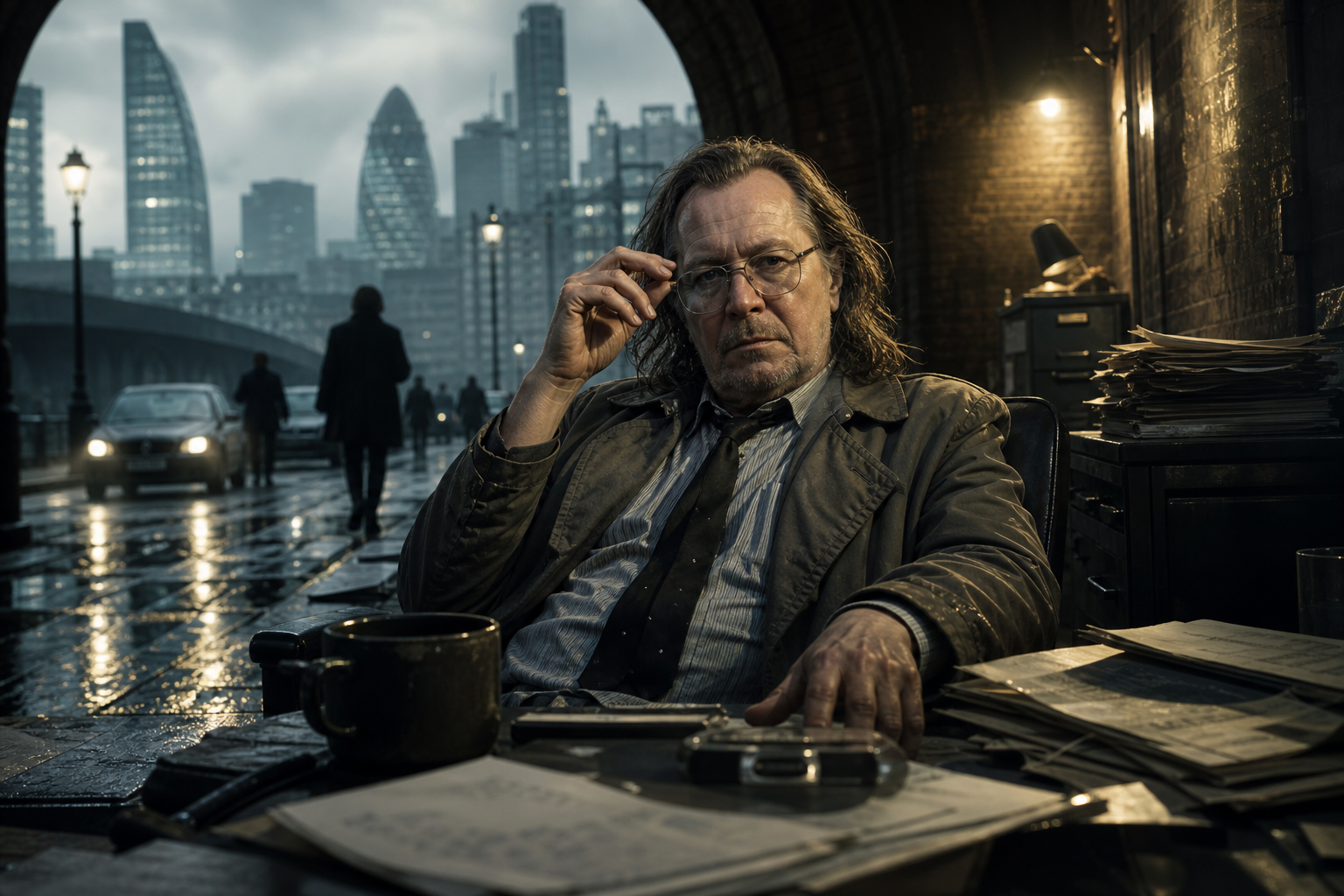
Spy stories love a sheen: tailored suits, glassy headquarters, and heroes who look like they slept in a briefing memo. Slow Horses delights in the opposite—burnt coffee, bad fluorescent lighting, and people who feel like they’ve been “misfiled” by an institution that runs on paperwork and grudges. And yet, none of it is accidental. The series’ greatest trick is how carefully its mess is designed.

Start with the sound. The opening theme, “Strange Game,” doesn’t just set a mood—it’s a statement of purpose: this is espionage as attrition, not adrenaline. Variety reports that Mick Jagger wrote lyrics and performed the song after composer Daniel Pemberton shared an instrumental main title and the concept for the opening sequence, making it Jagger’s first TV theme. That detail feels perfectly on-brand: a rock icon lending swagger to a show that otherwise insists swagger is overrated.

Then there’s the pace. In the streaming era, momentum is a superpower, and the production has leaned into it. The show has been able to roll out seasons quickly in part because it has shot seasons back-to-back, a schedule noted in the series’ production background. That kind of pipeline changes what TV can feel like: less like a once-every-few-years “event,” more like a living, ongoing job—again, exactly the vibe this series thrives on.

The “realness” extends to London itself. Rather than hiding behind anonymous stages, the series makes the city’s ordinary corners do the work. Time Out points to Aldersgate Street near the Barbican as the exterior area used for the drab headquarters façade. It’s an inspired choice: the building doesn’t scream “secret agency,” which is precisely why it works.

And the clothes—arguably the show’s sharpest writing tool. The Television Academy’s costume feature quotes designer Guy Speranza on aiming to make the characters look “as British as they can be,” with wardrobe choices that telegraph status, self-image, and stubbornness. One of the most delicious contradictions comes via a specific accessory: ScreenFinds notes that Speranza sourced Edward Green shoes for Jackson Lamb, a quietly premium detail peeking out from the character’s generally disheveled presentation. It’s the kind of costume note that tells a whole backstory without ever raising its voice.

Even the star’s approach is anti-vanity. In an ABC News interview, Gary Oldman explains that he didn’t want prosthetic makeup for the role—favoring a simpler, repeatable physical approach instead of elaborate transformations. The result is a character who feels lived-in rather than “built,” as if he’s been occupying the same battered chair for years.

Put it all together, and Slow Horses becomes a masterclass in controlled chaos: carefully crafted dowdiness, a theme song with a legendary bite, and a London you can actually walk through—proof that in spycraft, as in storytelling, the most convincing disguises are often the plainest.

Read full article
  1. What rock legend wrote lyrics and performed “Strange Game,” the series’ opening theme, described as his first TV theme song? Reveal answer Hide answer

    Mick Jagger. au.variety.com

  2. What production approach has helped the series release new seasons quickly by filming installments in pairs? Reveal answer Hide answer

    It has shot seasons back-to-back. en.wikipedia.org

  3. What London street near the Barbican is cited as the area used for the headquarters exterior façade? Reveal answer Hide answer

    Aldersgate Street. timeout.com

  4. Who is the costume designer quoted describing the goal of making the characters look “as British as they can be”? Reveal answer Hide answer

    Guy Speranza. televisionacademy.com

  5. In an interview about his approach to the role, what kind of makeup did Gary Oldman say he didn’t want to use? Reveal answer Hide answer

    Prosthetic makeup. abc.net.au

Sources

View full trivia

Midnight Margaritas and Movie Alchemy: When Hollywood Bottles the Unexplainable

There’s a particular kind of screen magic that has nothing to do with capes, prophecies, or lightning bolts. It’s the kind you can almost taste: salt on the rim, music in the next room, a laugh you didn’t plan on, and a story that makes the ordinary world feel slightly tilted—in a good way.

That vibe is having a moment again, thanks to the steady recycling of comfort-viewing favorites and the new wave of glossy, escapist thrill rides. Consider how a long-awaited follow-up can arrive with a modern kind of showmanship: the official trailer materials for Practical Magic 2 go unusually heavy on craft credits, calling out everything from costume design to casting to music. It’s a small detail, but it signals a big intention—this isn’t just a reunion, it’s a carefully built atmosphere.

Atmosphere, of course, is also a production problem: how do you make “romantic chaos” or “high-gloss danger” feel spontaneous when it’s anything but? Sometimes the solution is simple old-school movie construction. The Proposal includes a scene that sounds like it would be a nightmare for animal safety—an eagle swooping in on a tiny dog—but American Humane’s production notes describe how it was achieved through separate shots and editing, with trained animals and careful staging. The gag plays as effortless; the behind-the-scenes reality is precision.

Precision can be invisible in another way: the tiny creative choices that become a whole character. While making Grease, Olivia Newton-John reportedly insisted on a screen test because she was nervous about taking the role—and she said she couldn’t do an American accent, so the production adjusted the character’s background to fit her natural voice. That’s show-business pragmatism at its best: instead of forcing a performance to conform, the story shifts to meet the performer.

Even action spectacle relies on a kind of narrative alchemy—reframing familiar ingredients so they pop. Bullet Train, for all its propulsive mayhem, is rooted in a novel by Kōtarō Isaka (originally titled Maria Beetle). Knowing there’s a literary engine under the neon, needle drops, and stunt-work adds a fun extra layer: the same story can be tuned like a cocktail, with different proportions depending on the medium.

And sometimes the “magic” is simply where a project begins. Cobra Kai launched on YouTube’s subscription platform before it transformed into a broader streaming phenomenon—proof that a scrappy starting point can become a cultural mainstay if the tone hits right. In the end, that’s the trick Hollywood keeps chasing: a recipe that feels like a midnight drink with friends—carefully made, and still surprising.

Read full article
  1. Who is credited as the director in the official trailer materials for Practical Magic 2? Reveal answer Hide answer

    Susanne Bier. youtube.com

  2. What ingredient do Sally and Gillian add to Jimmy’s tequila that accidentally kills him? Reveal answer Hide answer

    Belladonna americanhumane.org

  3. What is the title of the song that plays during the famous midnight margaritas scene? Reveal answer Hide answer

    Coconut vanityfair.com

  4. Who wrote the song that plays during the famous midnight margaritas scene? Reveal answer Hide answer

    Harry Nilsson crunchyroll.com

  5. What do Sally and Gillian form tofinally rid Gillian of Jimmy’s spirit Reveal answer Hide answer

    Coven en.wikipedia.org

Sources

View full trivia

TV’s Big Night, Built in the Small Details

Awards seasons love the big, shiny moments: speeches, stage lights, surprise upsets. But the best part of any winning year is the reminder that television is often a triumph of invisible decisions—where to shoot, what to build, what to hide, what to teach an actor to do with their hands so the whole thing feels true.

Take the art of “place.” Coastal drama Widow’s Bay didn’t simply point cameras at a pretty shoreline and call it a day. Its production design leaned into the reality that real locations are rarely “perfect,” then used controlled dressing and set adjustments to sell a community vibe that feels lived-in and thrifty rather than postcard-polished. That’s the secret sauce of so many great shows: authenticity isn’t found, it’s manufactured—carefully.

On the other end of the realism spectrum sits The Pitt, where believability isn’t just a matter of props and paint. The cast underwent a time-intensive medical boot camp, the kind of training that turns procedural movements—like CPR technique—into muscle memory. When actors don’t have to “act” the mechanics, the camera can focus on faces, pacing, panic, and relief. It’s a reminder that some of the most compelling drama comes from competence under pressure.

Then there’s the modern industry’s favorite sport: secrecy. Pluribus reportedly filmed under a working title—one of those stealth labels that keeps curious onlookers (and online sleuths) from spoiling surprises. What’s fascinating is how that secrecy can shape the creative process, too. Casting teams can be asked to find talent for roles they’re not allowed to fully explain, sometimes widening the net beyond standard TV pipelines.

DTF St. Louis shows how story worlds now extend beyond the screen. It didn’t just spin from a vacuum; reporting describes an origin point in real-world journalism, and production notes mention a deliberately built online artifact that deepens the show’s investigative timeline. That kind of “extra” used to be marketing; now it’s often world-building.

And when a series goes big on access, it goes very big. The Diplomat secured a historic mansion location and reportedly closed it for months—an eye-popping logistical flex that underscores how high-end TV increasingly borrows the playbook of prestige film: lock down a place, control every angle, and let the setting do half the acting.

The trophies are the headline, sure. But the craft choices—training, secrecy, design cheats, and bold location grabs—are the real engine of an Emmy year.

Read full article
  1. Which Massachusetts coastal area doubled as the “main street” exteriors for Widow’s Bay? Reveal answer Hide answer

    Rockport’s Bearskin Neck in Massachusetts. mafilm.org

  2. How long was the cast’s medical boot camp described as lasting for The Pitt? Reveal answer Hide answer

    Two weeks. paramountplus.com

  3. What working title was Pluribus filmed under? Reveal answer Hide answer

    “Wycaro 339.” en.wikipedia.org

  4. According to production notes, what online artifact did the designers create for DTF St. Louis to deepen the story world? Reveal answer Hide answer

    A city website tracking the timeline of the death and investigation. en.wikipedia.org

  5. Which historic mansion did The Diplomat secure as a Season 3 location, per Netflix’s locations feature? Reveal answer Hide answer

    Coe Hall Historic House. netflix.com

Sources

View full trivia

Life in the Bubble: Why Stories About Sealed Worlds Never Let Us Go

There’s a special kind of tension that comes from a story set inside a sealed environment: the sense that safety and captivity can look suspiciously alike. The appeal isn’t just the mystery of what’s outside. It’s the drama of what happens inside when rules harden into ritual—and when a few people start asking inconvenient questions.

Apple TV+’s Silo leans into that pressure-cooker energy so strongly that even its identity was in flux before viewers ever hit play. In Apple’s own press materials, the series is described as “Silo” but also noted as formerly known under another name; meanwhile, a separate production listing documents yet another working title used during filming. In other words: even the label on the door changed as the show found its final shape—a fitting detail for a story fascinated with who gets to control the narrative.

That obsession with memory and narrative control shows up in other modern genre projects, too. Reminiscence is literally about the lure of the past, and its making was shaped by the defining disruption of recent years: editor Mark Yoshikawa has described how, once the pandemic hit, the team had to leave the office and finish post-production remotely. A film about revisiting personal history ended up being assembled in a historically strange moment, with the work itself happening in a kind of enforced isolation.

If you want your “sealed world” stories with a sharper wardrobe and a louder bang, John Wick: Chapter 2 offers a sleek version of the same idea: a hidden society with strict codes, specialized services, and an infrastructure that feels airtight. In a behind-the-scenes detail that’s almost too perfect, reporting notes that Keanu Reeves brought in his real-life tailor to appear as the on-screen tailor in the sequel—turning a piece of character mythology into a wink at the production’s real-world craftsmanship.

And sometimes the sealed world is simply a room full of people whose social rules are as binding as any airlock. Bad Shabbos plays with that pressure in comedic form; festival/program notes highlight a surprise casting choice—Method Man as a helpful doorman—plus mention that a crowd-pleasing scene was partly ad-libbed. It’s the human version of a containment unit: put a bunch of strong personalities together, then watch what happens when etiquette collides with impulse.

Even nostalgia can be a silo. The Orange Years: The Nickelodeon Story is a documentary born from fandom and persistence. According to reporting, the directors kicked things off via crowdfunding—an origin story that mirrors the DIY spirit of the channel’s early, scrappy identity. Sometimes the “outside world” you’re chasing isn’t a wasteland or a conspiracy; it’s simply the past you’re trying to reconstruct before it fades.

Five stories, five different locks on the door—each reminding us that the most gripping question isn’t only what’s out there. It’s who benefits from keeping you in here.

Read full article
  1. In Apple TV+ press materials, Silo is described as formerly known by what earlier title? Reveal answer Hide answer

    Wool apple.com

  2. What real-world event did editor Mark Yoshikawa say forced Reminiscence to be edited remotely after the team left the office? Reveal answer Hide answer

    The COVID-19 pandemic cinemontage.org

  3. According to reporting, Keanu Reeves brought in his real-life tailor to play the on-screen tailor in John Wick: Chapter 2—who was it? Reveal answer Hide answer

    Vincenzo Amoruso slashfilm.com

  4. Which rapper appears as a helpful doorman in Bad Shabbos, according to a festival/program write-up? Reveal answer Hide answer

    Method Man dhhrm.org

  5. Before The Orange Years: The Nickelodeon Story had major backing, what did reporting say the filmmakers launched to get the documentary going? Reveal answer Hide answer

    A crowdfunding campaign moviemaker.com conventionalrelations.net

Sources

View full trivia

The Box-Office Winners’ Circle: Five Tennis Films and How They Got Made

If you’re measuring “success” the most old-fashioned way—tickets sold—this batch of tennis films has a clear pecking order. The top earner in the set is *Challengers* (2024), which reached $96.1M worldwide, a figure that puts it well ahead of the pack here.

Its release story, though, is a reminder that momentum on screen can be interrupted by forces off it. According to its documented production and release history, the film had been announced as the opening selection for the Venice International Film Festival, then was pulled and delayed amid the 2023 SAG-AFTRA strike. Even before anyone saw a frame, it had already become a case study in how festival positioning, labor realities, and scheduling can reshape a studio launch.

Next comes *Wimbledon* (2004) at $41.5M worldwide. Part of its appeal is how closely it courts authenticity while still playing as a mainstream romantic comedy. Wimbledon’s own compendium notes that the Club assisted in making the film, and that recognizable tennis figures appear—particularly in a broadcast context—adding a layer of “this could almost be real” texture that’s hard to fake on a soundstage.

Close behind is *King Richard* (2021) with $39.4M worldwide. Its making-of material emphasizes a specific creative pressure point: the real-life sisters at the center of the story were protective of how their mother would be portrayed, and insisted that the character be given fair credit for her role as a mother and coach. That kind of behind-the-scenes advocacy is a quiet but powerful shaping force—less about headline casting, more about who gets narrative weight.

Farther down the list is *Battle of the Sexes* (2017) at $18.4M worldwide, a film that leans into its ensemble of real-life figures. Its cast list includes Sarah Silverman as Gladys Heldman, identified as the founder of *World Tennis* magazine—one of those “wait, she’s in this story too?” roles that signals how a sports moment can depend on organizers and advocates as much as athletes.

Rounding out the five is *Borg vs McEnroe* (2017) at $3.4M worldwide. A ScreenDaily production account spotlights the craft challenge at the heart of any tennis movie: the leads underwent months of physical tennis training because the production wanted the on-court play to look authentic. It’s the least lucrative of these titles by worldwide gross, yet it arguably makes the clearest bid for you to believe the match is really happening in front of you.

Read full article
  1. In King Richard, which Williams-family member was described as the film’s main on-set liaison for authenticity? Reveal answer Hide answer

    Isha Price. screendaily.com

  2. In Borg vs McEnroe, which real-life family member of Björn Borg was cast after responding to an open call for sporty youths? Reveal answer Hide answer

    Leo Borg. screendaily.com

  3. For Challengers, which former pro served as a key tennis coach/consultant helping train the cast? Reveal answer Hide answer

    Brad Gilbert. washingtonpost.com

  4. Which film assigned seperate crew/directors to particular players for each episoder? Reveal answer Hide answer

    Break Point. They assigned specific crews/directors to particular players and kept them with those players across the season. atptour.com

  5. For Wimbledon (2004), which Wimbledon footage was used in some scenes as a live backdrop? Reveal answer Hide answer

    The 2003 Wimbledon Championships. imdb.com

Sources

View full trivia

How Taylor Sheridan Turned Modern America Into Must-Watch Myth

There’s a particular kind of contemporary drama that feels both brand-new and oddly ancient: hard-edged people making impossible choices in places where the rules are written in dust, blood, and paperwork. That lane—part frontier saga, part procedural, part moral philosophy—has become a signature of Taylor Sheridan’s screen world. His stories don’t just ask who’s right; they ask what “right” even costs when institutions creak, borders blur, and survival becomes a daily negotiation.

A big part of the appeal is how these projects treat setting as destiny. Wide-open landscapes aren’t just pretty backdrops; they’re pressure cookers. Remote highways and isolated communities create their own economies and codes, and Sheridan’s characters often live at the intersection of old loyalties and new realities—family versus duty, land versus money, justice versus order. It’s the kind of storytelling that makes you feel the weather, the distance, the exhaustion.

Another hallmark: the way power is portrayed as both seductive and corrosive. Sheriffs, fixers, soldiers, ranchers, and corporate operators all speak the same language of leverage—who owes whom, who can be bought, who can’t be moved. The dialogue tends to be spare but pointed, with humor that lands like a blunt instrument. And when violence arrives, it’s rarely celebratory. It’s messy, consequential, and often followed by silence rather than speeches.

Sheridan’s background as an actor matters here. He writes roles that performers can dig into—characters who communicate as much through restraint as through confession. You’ll see scenes built around negotiation, observation, and the slow reveal of motive. Even the “tough” characters are usually carrying something tender or broken under the armor, which keeps the stories from collapsing into simple machismo.

What’s fascinating is how these narratives stitch together multiple American genres without feeling like a mash-up. You get the sweep of a family saga, the tension of a thriller, the procedural gears of law and enforcement, and the moral unease of war stories—sometimes all in the same episode or film. The result is entertainment that doubles as a portrait of systems: prisons, policing, private security, ranching empires, resource extraction, and the politics that swirl around them.

Love it or argue with it, Sheridan’s world has become its own modern mythology—one where the frontier isn’t gone, it’s just been rezoned, litigated, and televised. And the people still living on its edge are as compelling—and as combustible—as ever.

Read full article
  1. Which thriller faced pressure to rewrite its FBI lead as a man but kept the role female? Reveal answer Hide answer

    Sicario. theguardian.com

  2. What earlier working title did Tulsa King have when it was originally set in Kansas City? Reveal answer Hide answer

    Kansas City King. washingtonpost.com

  3. Which TV drama was first written as a feature film and pitched as “The Godfather in Montana”? Reveal answer Hide answer

    Yellowstone. en.wikipedia.org

  4. What was the original title of Hell or High Water before it was renamed? Reveal answer Hide answer

    Comancheria. easternnewmexiconews.com

  5. What city became a key production hub after filming shifted for Mayor of Kingstown? Reveal answer Hide answer

    Pittsburgh, Pennsylvania. filmspeak.net paramountpressexpress.com

Sources

View full trivia

When Football Hits the Screen: The Art of Making a Game Feel Real

Football stories on film and television live or die on a single, surprisingly hard-to-fake ingredient: authenticity. Not “we bought some jerseys” authenticity, but the kind where the huddle cadence sounds right, the sideline chaos has a rhythm, and the stakes feel bigger than the scoreboard. The best productions understand that viewers can smell a phony play-call from across the room.

A lot of that realism comes from an army you never see. Choreographers and stunt coordinators map out blocking like dance. Camera teams learn where the play is going before the actors do, so the lens arrives at the collision a heartbeat early. Sound designers layer in cleats on turf, pads popping, distant PA announcements, and the weirdly specific roar that happens when a pass is just barely overthrown.

Then there’s the “football brain” problem: explaining strategy without turning the story into a chalk talk. Great sports storytelling uses the game as character pressure. A fourth-and-short isn’t interesting because of down-and-distance; it’s interesting because someone’s job, reputation, or relationship is on the line. That’s why the most memorable football scenes often happen off the field—contract negotiations, locker-room power struggles, media narratives that spin a player into a hero or a villain overnight.

Casting matters, too. Some productions prioritize performers who can convincingly move like athletes; others lean on doubles and clever framing. Either way, the goal is the same: make you forget you’re watching choreography. When it works, you don’t notice the technique—you just feel the momentum swing.

And yes, the industry loves cameos from real-world football voices, because they function like a stamp of credibility. But the best versions of that trick don’t scream “look who it is.” They slide into the world naturally, as if the story has always been happening on the edge of the real sports ecosystem.

Ultimately, football on screen isn’t just about touchdowns. It’s about systems—teams, leagues, agents, broadcasters, families—colliding under bright lights. The game is the engine, but the drama is the fuel. When a production nails both, you don’t just watch a season unfold. You feel it.

Read full article
  1. Which music star was reportedly cast as Willie Beamen in Any Given Sunday before dropping out? Reveal answer Hide answer

    Sean “Diddy” Combs. en.wikipedia.org

  2. In Little Giants, which actor ended up playing Junior Floyd after the role was recast once filming had already begun? Reveal answer Hide answer

    Devon Sawa. espn.com

  3. What fictional Texas town is the main setting of the Friday Night Lights TV series? Reveal answer Hide answer

    Dillon, Texas. en.wikipedia.org

  4. During football action filming for Brian’s Song, what did James Caan reportedly do so the other lead would look faster on the field? Reveal answer Hide answer

    He slowed down while running. imdb.com

  5. Cameron Crowe has said “Show me the money!” was inspired by an interview with a player from which NFL team? Reveal answer Hide answer

    The Arizona Cardinals. elcv.art.br

Sources

View full trivia

Why We Can't Stop Watching the Mob

Few movie genres have created a world as instantly recognizable as the gangster film. The tailored suits, dark restaurants, whispered conversations and sudden violence have become part of the visual language of cinema. But the best mob movies have never really been about crime alone. They are stories about ambition, loyalty, family, power and what happens when those things collide.

The genre stretches back to the earliest days of sound film. Movies such as Little Caesar and The Public Enemy helped establish the screen gangster as a major American character during the 1930s. Those early criminals were usually destined for a spectacular downfall, partly because Hollywood's production rules made it difficult to allow lawbreakers to simply ride off into the sunset.

By the 1980s and 1990s, filmmakers were telling much more complicated stories. Scarface transformed the gangster rise-and-fall story into an operatic tale of excess. Once Upon a Time in America examined friendship, memory and betrayal across decades. The Untouchables approached organized crime from the opposite direction, following the lawmen pursuing Al Capone rather than the criminals themselves.

One reason these movies remain so compelling is that their worlds often operate according to their own rules. Respect matters. Introductions matter. Who sits where at dinner can matter. A conversation that sounds perfectly polite may actually contain a threat. Audiences learn to read the language of the mob almost as carefully as the characters do.

Food is another recurring part of that world. Italian restaurants, family kitchens and elaborate meals frequently provide the backdrop for conversations about business, loyalty or murder. The contrast is part of the appeal: ordinary rituals of family life exist right beside extraordinary acts of violence.

The genre has also produced some of Hollywood's most memorable performances. Al Pacino, Robert De Niro, Joe Pesci, James Gandolfini, Chazz Palminteri and many others have played characters who could be charming in one scene and terrifying in the next. That unpredictability is one of the reasons audiences have remained fascinated with mob stories for generations.

And while these films often depict enormous wealth and power, they rarely make the criminal life look peaceful. The higher someone rises, the more enemies appear. Trust becomes difficult. Friends become liabilities. Family relationships fracture. The lifestyle that initially promises freedom eventually becomes a prison of its own.

Perhaps that is the enduring paradox of the great gangster movie: we are invited inside an exclusive world that looks glamorous from a distance, only to discover that almost nobody inside it can truly relax.

Read full article
  1. What early working title did AFI note for The Godfather? Reveal answer Hide answer

    “Don Michael.” catalog.afi.com

  2. What earlier title for GoodFellas was dropped to avoid confusion with a TV series? Reveal answer Hide answer

    “Wise Guy” (also listed as “Wise Guys”). catalog.afi.com

  3. What was The Sopranos called during early development, according to its production history? Reveal answer Hide answer

    “Family Man.” en.wikipedia.org

  4. Which A-list star was tentatively set to play Colin Sullivan in The Departed before choosing to remain only as a producer? Reveal answer Hide answer

    Brad Pitt. en.wikipedia.org

  5. Which real-life mobster served as a technical adviser on Casino and also appears onscreen as a hitman? Reveal answer Hide answer

    Frank Cullotta. en.wikipedia.org

Sources

View full trivia

How the Times Changed: TV’s Accidents, Arguments, and Aftershocks

Television history isn’t only a parade of beloved series—it’s a record of constant negotiation. Sometimes that negotiation is literal (with a network), sometimes it’s creative (with a cast), and sometimes it’s practical (with a production move). Look closely at a handful of era-defining titles and you can see how quickly “normal” rules changed.

Consider how a single sound can capture a whole medium’s evolution. In the early days of an animated phenomenon, a script didn’t even specify a famous exclamation; it merely called for an “annoyed grunt.” Performer Dan Castellaneta stretched that moment into what became “D’oh!”—a tiny example of how voice performance, ad-lib instinct, and writing-room shorthand can fuse into something larger than the scene that birthed it. It’s a reminder that TV’s most durable ideas are often born in the margins.

Sometimes the margins are where a show draws a boundary. On a wartime medical comedy-drama, producers pushed back against the expectation that every joke needed a recorded audience response. A compromise emerged: laughter could be omitted during operating-room scenes, protecting the tone when the series moved from banter to surgery. That small technical choice signaled a bigger shift—TV learning when to step aside and let a moment land without prompting.

Other times, the change comes from the audience, not the studio. A family sitcom introduced Steve Urkel as a character intended to be only occasional—by some accounts, a one-time presence. Instead, the response was so strong that the series’ center of gravity moved toward him. It’s a classic TV lesson: the plan is provisional, and a performer’s chemistry with a room can rewrite the map.

Even titles can be temporary. Before a certain ’90s hangout comedy became a brand unto itself, it cycled through multiple working names—“Insomnia Cafe,” then “Six of One,” then “Friends Like Us”—before settling on the one the world would remember. The final choice feels inevitable now, which is exactly what good development is supposed to do: erase the seams.

And sometimes the seams can’t be hidden, because geography itself changes the show. After five seasons filming in Vancouver, a long-running paranormal drama moved production to Los Angeles starting with season six. The shift affected more than scenery; accounts note that much of the original crew didn’t remain, and the change sparked discussion about the series’ tonal feel. In TV, the “where” is often inseparable from the “what.”

Read full article
  1. What earlier working title was used for Friends before it got its final name? Reveal answer Hide answer

    Six of One. abcnews.com

  2. Which Family Matters character was initially intended as a one-episode appearance? Reveal answer Hide answer

    Steve Urkel. latimes.com

  3. On The X-Files, which actor did creator Chris Carter insist on casting as Dana Scully? Reveal answer Hide answer

    Gillian Anderson. theguardian.com

  4. In M*A*S*H, which character's death was handled with unusual secrecy during production to preserve its impact? Reveal answer Hide answer

    Lt. Col. Henry Blake. interviews.televisionacademy.com

  5. What school commitment nearly kept Sarah Michelle Gellar from attending a key network casting test for Buffy the Vampire Slayer? Reveal answer Hide answer

    A role in her high-school play. backstage.com

Sources

View full trivia

How to play

  1. Select a clue and fill the matching squares.
  2. Toggle across and down to use crossings.
  3. Check letters when you want feedback. The puzzle stays playable in the archive.

A free 5×5 crossword about movies, TV, and entertainment. MediaCircle reviews each published puzzle before it goes live.