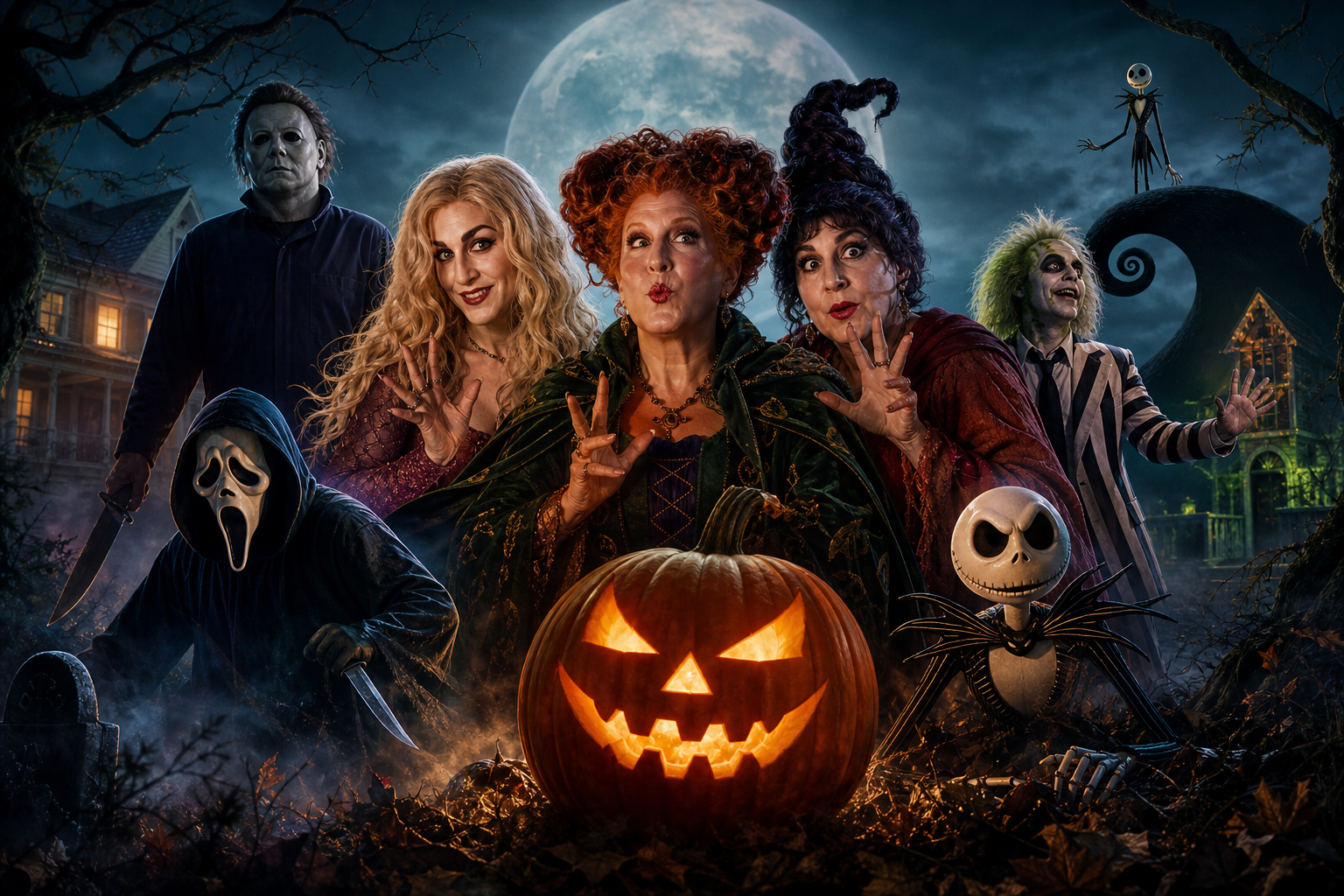
For movie fans, Halloween means a good excuse to revisit their favorite scares. For Hollywood, it means another chance to sell them. Every October brings a ready-made occasion for rereleases, streaming promotions, costumes, and merchandise. Movies like *Halloween*, *Scream*, *Beetlejuice*, and *Hocus Pocus* show how a memorable character or a familiar title can keep attracting audiences long after its first theatrical run. But these seasonal staples took very different routes to becoming valuable Hollywood properties.
**Halloween (1978)** offers the most dramatic example: a reported **$325,000 production budget that generated roughly $70 million in worldwide ticket sales**. Its most recognizable asset emerged from a remarkably inexpensive solution. Production designer Tommy Lee Wallace modified a commercially produced Captain Kirk mask, widening the eyeholes, altering the hair, and repainting it to create Michael Myers’s unsettling face. What began as a practical production decision became the visual signature of an enduring franchise. Hollywood couldn’t have ordered a better outcome from a much more expensive mask.
**Scream (1996)** demonstrated the commercial power of making familiar scares feel fresh. With a reported **$15 million production budget**, it earned approximately **$173 million worldwide**. Its opening weekend in the U.S. and Canada brought in just **$6.4 million**, but sales grew over the following two weekends as audiences found it. Even the title involved a decision about how to sell the experience: Kevin Williamson’s screenplay was originally called *Scary Movie*, but the studio wanted to emphasize the danger alongside the humor. *Scream* delivered a clearer promise—and a name that could anchor a franchise.
**Beetlejuice (1988)** showed that a peculiar identity could be a commercial advantage. Made for a reported **$15 million**, it has collected approximately **$78 million in recorded worldwide box office, including rereleases**. Warner Bros., however, initially wanted the more literal title *House Ghosts*. Tim Burton jokingly suggested *Scared Sheetless*, then discovered the studio might actually use it. Keeping *Beetlejuice* preserved something more distinctive: a title that immediately calls its unruly central character to mind. That kind of recognition is valuable when a movie’s life extends beyond theaters and into costumes, merchandise, and repeat viewing.
**Hocus Pocus (1993)** is the reminder that opening results don’t always reveal a movie’s long-term potential. Its reported **$28 million production budget** yielded **less than $45 million worldwide during its original theatrical run**—a disappointment once marketing expenses and theaters’ share of ticket sales were considered. Released in July, the Halloween comedy found its lasting audience later through home viewing and repeated television broadcasts. Rereleases have helped raise its recorded worldwide theatrical total to approximately **$52 million**. The Sanderson sisters became annual attractions gradually, turning an underwhelming release into a property Disney could bring back to audiences every spooky season.
The business appeal is easy to understand. Most movies have to fight for attention when they arrive. A Halloween favorite gets a fresh invitation every year. The calendar gives studios a reason to promote it again, while familiar characters give audiences a reason to return.
For Hollywood, Halloween is big business: recognizable characters, sequels, merchandise, and another October to sell the scares. Michael Myers sells fear. The Sanderson sisters sell nostalgia. And audiences keep buying both. There’s nothing spooky about it—just a holiday that keeps giving Hollywood reasons to cash in.
*Figures are approximate, in U.S. dollars, and not adjusted for inflation. Box-office grosses are ticket sales, not studio profits; production budgets exclude marketing.*